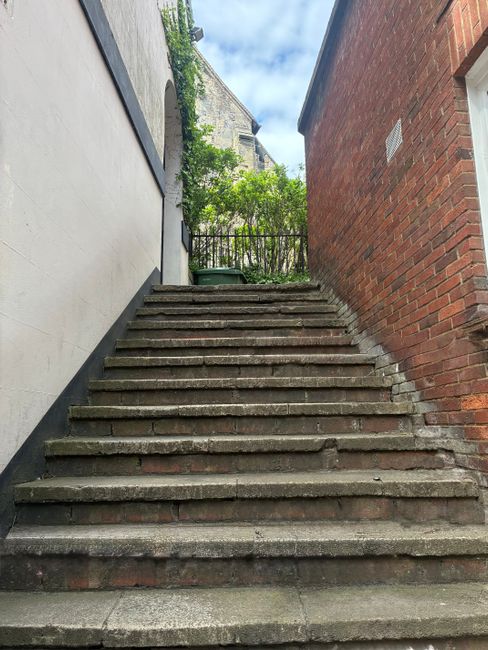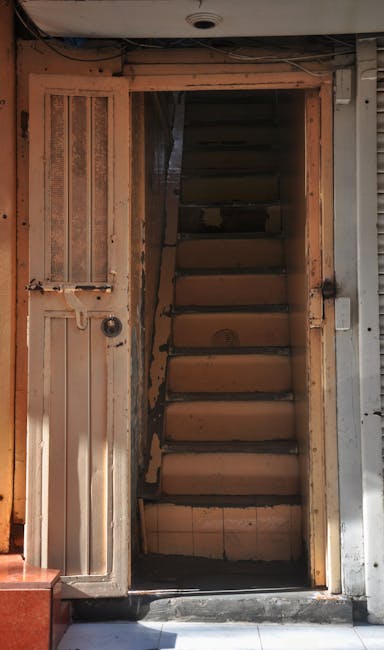
Fox Lane flat removals tips for narrow staircases: a practical guide for safer, smoother moves
If you are planning a flat move on Fox Lane, chances are the staircase is the part that makes everyone pause for a second. Narrow turns, awkward landings, low bannisters, and that one wardrobe you swore looked smaller in the bedroom can turn a straightforward move into a careful, slow process. These Fox Lane flat removals tips for narrow staircases are written for exactly that situation: to help you plan better, protect your furniture, and avoid the sort of last-minute scramble that makes moving day feel far longer than it should.
In this guide, you will find practical ways to measure access, prepare bulky items, reduce damage risk, and decide when it makes sense to use professional help. There are also local considerations, a simple checklist, and a few hard-won lessons that are easy to overlook until you are halfway up the stairs. Let's face it, tight staircases have a way of humbling even the best-laid plans.
- Why narrow staircases matter on Fox Lane
- How a tight-access flat removal works
- Key benefits and practical advantages
- Who this advice is for
- Step-by-step guidance
- Expert tips for better results
- Common mistakes to avoid
- Tools, resources and recommendations
- Law, compliance, standards and best practice
- Options and comparison
- Case study or real-world example
- Practical checklist
- Conclusion
- Frequently asked questions
Why Fox Lane flat removals tips for narrow staircases Matters
Narrow staircases are not just inconvenient. They change the whole rhythm of a move. A sofa that would glide through a wide hallway suddenly needs a pivot, a pause, and a bit of teamwork. A mattress can bend too much. A washing machine can catch on a stair lip. Even boxes become awkward when the staircase forces people into a single file.
On Fox Lane and nearby residential streets, flats often come with older layouts, tighter internal routes, and limited parking outside. That means the move is rarely just about lifting things into a van. It is about the route from the front door to the vehicle, the angle of the stairwell, the size of each landing, and how long it will take to move each item without scraping paintwork or straining someone's back.
Why does that matter so much? Because most moving problems in tight staircases are preventable. A little planning avoids damage to banisters, walls, furniture corners, and fingers. Also, once one item gets stuck, the whole job can slow down in a way that feels oddly dramatic. One minute you are confident. The next you are negotiating with a chest of drawers in the stairwell like it has opinions.
For anyone moving from a flat on Fox Lane, the real value of preparation is peace of mind. You know what will fit. You know what needs dismantling. You know what should be carried by two people rather than one. That calm matters, especially if you are moving on a deadline or juggling a handover, work, and the usual moving-day chaos.
How Fox Lane flat removals tips for narrow staircases Works
A tight-access flat move works best when you treat the staircase as part of the moving plan, not just a route between rooms. The process usually starts with measuring, followed by sorting, packing, protection, and then a methodical carry-out on the day. Simple in theory. Slightly less simple when you are standing in a hallway with a vacuum cleaner, three boxes, and a door that opens the wrong way.
The first stage is assessment. You look at the staircase width, the turning points, the ceiling height on landings, and any handrails, corners, or sharp edges that might catch. You also check whether the item can be disassembled. Wardrobes, bed frames, desks, and some sofas often move far more easily once separated into manageable parts.
The next stage is preparation. This means wrapping vulnerable edges, removing loose items from furniture, taping doors shut where needed, and making sure the path is clear. If your move involves large appliances or fragile items, protection matters even more. A staircase can be a surprisingly unforgiving place for polished wood, glass, or soft upholstery.
On moving day, the order of loading makes a difference. The team should usually move the largest or most awkward item first, while everyone still has energy and the route is clear. Smaller boxes can follow. If the staircase is especially tight, items may need to be turned vertically or carried at an angle, but only if it is safe to do so and the item is built for that kind of handling.
It is also worth planning the timing. A morning move can be calmer because neighbours are less likely to be using the stairwell, and daylight helps with visibility. By late afternoon, fatigue creeps in and the margin for error gets smaller. Nothing dramatic, just reality.
Key Benefits and Practical Advantages
Good planning for narrow-staircase removals is not about being fussy. It pays off in ways you notice immediately on the day and in the days after.
- Less damage: walls, bannisters, banisters paint, furniture corners, and floor edges stay better protected.
- Less stress: you are not making decisions in the middle of a squeeze on the landing.
- Faster progress: when items are measured, wrapped, and ready, the move tends to flow better.
- Lower risk of injury: stairs and awkward loads are a bad combination when rushed.
- Better use of labour: the right number of people can be assigned to the right item.
- Cleaner move-out: fewer scuffs and less mess to deal with at the end.
There is another benefit that is easy to miss: confidence. Once you know an item will fit, or you know exactly what must come apart before it leaves the flat, the whole day feels more manageable. That can be the difference between a move that feels chaotic and one that feels like a job being handled properly.
For renters, that can matter when it comes to end-of-tenancy expectations. For homeowners, it matters because damage claims and repair delays are a pain nobody wants. To be fair, most people are not worried about the staircase itself. They are worried about what the staircase might do to their stuff.
Who This Is For and When It Makes Sense
These tips are useful for anyone moving from, into, or within a flat on Fox Lane where access is tight. That includes first-time renters, families moving to a larger place, downsizers, and anyone relocating after years in the same home with furniture that has slowly accumulated like a small museum.
You will especially benefit from this advice if any of the following apply:
- the staircase is narrow or curved
- there is no lift
- the landing space is limited
- your furniture is bulky, heavy, or awkwardly shaped
- parking near the building is tight
- you have fragile items, mirrors, glass, or appliances to move
- you are moving on a schedule and cannot afford delays
This guidance also makes sense if you are comparing removal options. A standard van service might be fine for smaller loads, but narrow-staircase flats often need a more careful approach. That could mean extra padding, a smaller vehicle, a more experienced crew, or just a smarter load plan. Sometimes all four.
If you are unsure whether your move needs extra help, ask yourself a simple question: could two people carry the largest item down the staircase without twisting, scraping, or blocking the route? If the answer is no, it is worth planning differently. That little thought can save a lot later.
Step-by-Step Guidance
Here is a practical, no-nonsense way to handle a flat removal on a narrow staircase. It is not glamorous. It works.
1. Measure before you pack
Measure the widest point of the staircase, the landing depth, and any turns. Then measure your largest furniture pieces. If an item is too wide in one piece, note whether it can be dismantled. A tape measure, a phone camera, and ten quiet minutes can prevent a lot of guesswork.
2. Identify the awkward items early
Start with the troublemakers: wardrobes, sofas, divan bases, mattresses, glass-topped tables, desks, and appliances. These are the items most likely to create bottlenecks. Plan them first instead of leaving them to the end when everyone is tired and the stairs have already claimed some energy.
3. Clear the route completely
Remove shoe racks, doormats, plant pots, hanging hooks, and anything else that narrows the route. Open doors fully where possible. If there is a shared hallway or communal stairwell, be considerate and keep access clear for neighbours too. It sounds obvious, but in the rush, obvious things vanish.
4. Disassemble where it helps
Take apart bed frames, remove table legs, empty drawers, and detach shelving if you can do so safely. Keep fixings in labelled bags and tape them to the relevant item. Truth be told, there is nothing more annoying than a nice bed frame arriving intact but with its screws mysteriously missing.
5. Wrap vulnerable surfaces
Use furniture blankets, corner protection, stretch wrap, and mattress covers where needed. Edges tend to get knocked first on stairs, especially around turning points. If something has a delicate finish, protect it before it leaves the room, not halfway down the stairs when panic starts whispering.
6. Assign the right carry team
Heavy or awkward items should be handled by enough people to keep the load stable. One person at the front, one at the back, and sometimes a third guiding on tight turns can make a big difference. The point is control, not bravado.
7. Load the van in the right order
Load large and heavy items carefully, then build around them with boxes and softer items. This helps protect contents and reduces the amount of reshuffling needed later. If the van will make more than one stop, keep items for the final drop easier to reach.
8. Do a final stairwell check
Before leaving, check for scuffs, forgotten fixings, loose rubbish, and items left in cupboards or behind doors. Staircases collect little things, and those little things have a habit of becoming important after the van has gone.
Expert Tips for Better Results
Some of the best narrow-staircase advice is not flashy at all. It is small, practical thinking that saves time and awkwardness.
- Use painter's tape or temporary protection on corners: especially near tight turns and door frames.
- Take photos before dismantling: it helps with reassembly and avoids head-scratching later.
- Empty furniture fully: drawers are heavier than people think, and they shift unexpectedly.
- Wear gloves with grip: better control, fewer slips, less chance of damaged finishes.
- Keep a small tool kit nearby: screwdrivers, Allen keys, tape, and a marker pen are the basics.
- Protect floors early: a small sheet or runner can be worth its weight in gold on a wet or dusty day.
One useful rule: if an item feels even slightly unsafe on the stairs, stop and rethink. That does not mean you have failed. It means you are being sensible. Narrow access rewards caution. It punishes rushing.
Another tip that tends to be overlooked is communication. On a tight staircase, everyone should know who is leading, who is guiding, and when to pause. A simple "stop," "pivot," or "hold" can prevent a lot of banging and swearing. Not that anyone ever swears while moving house, of course.
If you are arranging help from a removals team, share honest details before moving day. Mention the staircase width, floor level, parking distance, and any bulky items. Good planning on the front end usually means a calmer job on the back end.
Common Mistakes to Avoid
Most staircase move problems come from trying to save time in the wrong place. The following mistakes are common, and very avoidable.
- Measuring the furniture but not the route: the item may fit the room, but not the bend on the stairs.
- Leaving dismantling until moving day: that creates delay and often causes rushed decisions.
- Overfilling boxes: heavier boxes are harder to control and more likely to slip.
- Ignoring mirrors, handles, and protruding corners: small details catch stair rails all the time.
- Assuming one person can manage it: what looks manageable on paper can become awkward very quickly.
- Forgetting parking and access outside: the stairwell is only half the story.
- Skipping protective wrapping: one scrape on a turn can spoil a perfectly good item.
The biggest mistake, though, is underestimating the staircase itself. If the route is tight, give it the respect it deserves. That may sound a bit dramatic, but anyone who has tried to rotate a sofa on a landing knows exactly what I mean.
There is also a common emotional mistake: assuming that asking for more help means the move has become a problem. It usually means the opposite. Better support often keeps the move moving. Simple as that.
Tools, Resources and Recommendations
You do not need an entire warehouse of equipment to move a flat with a narrow staircase, but a few good tools make a real difference.
| Tool or resource | What it helps with | Why it matters on narrow stairs |
|---|---|---|
| Tape measure | Route and furniture measurements | Prevents guesswork and failed carry attempts |
| Furniture blankets | Surface protection | Reduces scuffs on walls, rails, and furniture edges |
| Stretch wrap | Securing drawers and loose parts | Stops pieces shifting during tight manoeuvres |
| Mattress bags | Keeping bedding clean and dry | Makes bulky soft items easier to handle through tight spaces |
| Basic tool kit | Dismantling furniture | Lets you reduce item size before the stair section |
| Floor protection | Reducing scratches and dirt transfer | Useful on painted steps, wood floors, or communal entrances |
If you are comparing service options, it can help to look at wider moving support too. For example, a man and van setup may suit smaller loads, while a more complete removal services approach can be better for heavier furniture and more complex access. If you need packing help, the page for packing and unpacking services gives a sense of how professional packing can reduce pressure on the staircase itself because fewer loose items need carrying by hand.
You may also find it useful to look at broader information on insurance and safety before moving day. When access is tight, knowing what protection and safety standards are in place helps everyone feel a bit more at ease.
Law, Compliance, Standards and Best Practice
For a flat move with narrow staircases, the main compliance concerns are practical rather than dramatic: safety, access, damage prevention, and waste handling. In the UK, moving companies and customers both benefit from sensible risk awareness, especially where heavy lifting and shared access areas are involved.
Best practice usually includes clear communication, suitable equipment, and careful manual handling. If a stairwell is too tight for an item to be carried safely, it is better to stop and reassess than to force it. That is not just a nicety; it is a sensible approach to avoiding injury and property damage.
If you are disposing of furniture or bulky items as part of the move, make sure the disposal route is lawful and appropriate. In practical terms, that means not leaving items in communal spaces and not assuming a skip, alley, or pavement is fair game. If you are unsure, it can help to read local moving advice and disposal guidance before the day. For example, some readers moving around Palmers Green find local context useful in furniture disposal laws in Enfield for Palmers Green movers and dealing with bulky waste in N13 Palmers Green flats.
If your move involves shared hallways, parking limits, or nearby street restrictions, planning ahead is essential. Some streets need extra consideration for loading and unloading, and local access rules can change how long the move takes. Readers in the area often check practical local guidance like parking access guide for Palmers Green Triangle moves or Enfield Council permits for removals in Palmers Green before setting a date.
Insurance is another sensible consideration. If a stairwell is especially tight, ask what level of cover applies to handling and transit. The answer may vary depending on the provider and the nature of the job, so clear questions are better than assumptions.
Options, Methods, or Comparison Table
There is no single right way to move a flat on a narrow staircase. The best method depends on how much furniture you have, how tight the access is, and how much time you want to spend dismantling things beforehand. Here is a simple comparison.
| Method | Best for | Pros | Trade-offs |
|---|---|---|---|
| Self-move with friends | Small loads, lighter furniture | Lower cash cost, flexible timing | Higher risk of strain, slower on tight stairs, less protective handling |
| Man and van | Medium moves, a few bulky items | Good balance of cost and support | May still need you to prepare, dismantle, and organise access well |
| Full removals team | Heavier loads, awkward access, limited time | More efficient, better for heavy lifting and protection | Usually costs more, though often worth it for complex flats |
| Hybrid approach | Moves needing both value and control | Flexible, can suit tight staircases well | Needs clear coordination between what you do and what the team handles |
For many Fox Lane flats, the hybrid approach is a strong middle ground. You might pack and dismantle simple items yourself, then bring in help for heavier furniture and loading. That keeps costs sensible without turning your staircase into an endurance test.
If you are still weighing up providers, browsing removal companies can help you understand the kind of support available, while pricing and quotes is useful when you want a clearer feel for what affects the final figure. No one enjoys vague pricing. Nobody.
Case Study or Real-World Example
Here is a realistic example from the kind of move people on Fox Lane often face. A one-bedroom flat had a narrow internal staircase, a small landing, and a sofa that looked modest in the living room but suddenly became enormous at the top step. The residents also had a bed frame, a chest of drawers, a dining table, and several packed boxes.
Rather than trying to carry everything as-is, the move was broken into stages. The bed frame was dismantled the night before. The drawers were emptied and wrapped. The dining table legs were removed. The sofa cushions came off first, then the frame was guided slowly down the stairs with one person at each end and another person watching the landing turn. Nothing rushed. No heroic lunges.
The result was simple: no wall damage, no broken fittings, and far less stress than expected. The couple later said the best decision was not any one tool or trick, but the decision to stop treating the staircase as an afterthought. That is really the heart of it.
There was one small snag. A floor lamp had been left inside a wardrobe and nearly became a surprise casualty. That was fixed just in time, but it is a good reminder: check the insides of cupboards, under beds, and behind furniture. Little things hide in there.
If your move feels similar, it may also help to read local background advice such as moving from Fox Lane to N13 tips for Palmers Green moves, especially if you want a better feel for access, timing, and local conditions in the area.
Practical Checklist
Use this before moving day. It keeps things sane.
- Measure the staircase width and landing space
- Measure bulky furniture in advance
- Identify anything that must be dismantled
- Empty drawers and cupboards
- Gather tape, tools, wrapping, and protective blankets
- Clear hallways, doorways, and stairwells
- Protect floors, corners, and banisters
- Check parking and access outside the building
- Confirm how many people are needed for each item
- Label screws and fittings carefully
- Keep fragile items separate and clearly marked
- Do a final walk-through for overlooked belongings
Quick expert summary: if the staircase is narrow, do not rely on strength alone. Success comes from measuring, reducing item size where possible, protecting surfaces, and moving in the right order. That is the quiet formula. Nothing fancy, but it works.
Get a free quote today and see how much you can save.
Conclusion
Fox Lane flat removals on narrow staircases are perfectly manageable when the move is planned around access rather than fought against it. Measure first, dismantle where sensible, protect what matters, and keep the route clear. Those small decisions make a big difference once boxes start moving and the stairwell becomes the narrowest part of your day.
It also helps to be realistic about what needs extra support. If a sofa is too awkward, if the landing is too tight, or if the building access is more complicated than expected, bringing in experienced help can save time, strain, and repair costs. In the end, a calmer move is usually the better move.
And when the last box is down, the stairs are clear, and that strange moving-day echo settles through the flat, you will be glad you planned it properly. One careful step at a time. That is how these things get done.
Frequently Asked Questions
What is the best way to move furniture down a narrow staircase?
The best approach is to measure the route first, dismantle anything that can safely come apart, protect corners and bannisters, and use enough people to keep the item stable. Do not force a bulky item through a turn if it clearly does not want to go.
How do I know if my sofa will fit down the stairs?
Measure the sofa at its widest point, including arms and feet if they cannot be removed, then compare that with the staircase width and turning space on the landing. If the measurements are close, assume you may need to remove parts or use a different route.
Should I dismantle furniture before a flat move?
Yes, whenever it helps the item fit safely and the manufacturer design allows it. Beds, tables, shelving, and some wardrobes often move much more easily once broken down into manageable pieces.
Is a man and van service enough for a narrow staircase move?
It can be, especially for lighter loads or smaller flats. But if you have heavy furniture, awkward access, or limited time, a more complete removals service may be a better fit.
What should I protect first in a tight stairwell?
Protect corners, bannisters, floor edges, and any painted surfaces that sit on the turning points. Those are the places most likely to get knocked.
How far in advance should I plan a move from Fox Lane?
As early as you can, ideally once you know the moving date. Even a short move becomes easier if you measure access, sort parking, and decide which items need dismantling before moving day.
What if my furniture is too big for the staircase?
First check whether it can be dismantled further. If not, you may need an alternative solution such as a different route, specialist handling, or choosing not to take the item with you. It is annoying, yes, but better than damaging the item or the building.
Do I need special equipment for narrow staircase removals?
You do not need a huge amount, but furniture blankets, stretch wrap, basic tools, gloves, and floor protection are very helpful. For very awkward items, professional moving equipment and experience make the job much easier.
How can I avoid damaging walls and paintwork?
Wrap furniture properly, move slowly on corners, assign someone to guide turns, and pad any vulnerable surfaces. Most wall damage happens when people rush or try to rotate large items without enough control.
Are there parking issues to think about on Fox Lane?
Often, yes. Even if the staircase is your main concern, loading space outside matters too. Check where the vehicle can stop, how far the carry is, and whether any local restrictions could affect unloading.
What are the most common mistakes in flat removals with narrow stairs?
The biggest mistakes are poor measuring, leaving dismantling too late, overpacking boxes, and underestimating how awkward one large item can become on a landing. Those four alone cause a lot of hassle.
Can I move on my own if I am careful?
Sometimes, for smaller and lighter items. But if the staircase is narrow and the furniture is heavy or bulky, it is far safer to have help. Careful is good. Overconfident is where trouble starts.
What is the easiest way to keep the move organised?
Use labels, keep fixings in clearly marked bags, move the most difficult items first, and keep the staircase clear at all times. A calm system beats a frantic one every time.